

Signia
German engineering built around the complete listening experience
German-engineered hearing technology designed around every aspect of listening, including a natural-sounding own voice, which is one of the most common adjustments new hearing aid wearers have to make.
What Signia is known for.
Signia is a German manufacturer whose most recognized feature is Own Voice Processing: technology that handles the sound of your own voice separately so it doesn't come across as hollow or unnatural, which is one of the most common adjustments people new to hearing aids have to make.
They offer a range of styles including the slim Styletto, designed to look more like an everyday accessory than a medical device, along with strong built-in support for patients managing tinnitus.
Meet the Signia IX.
Signia IX is Signia's current flagship hearing aid.
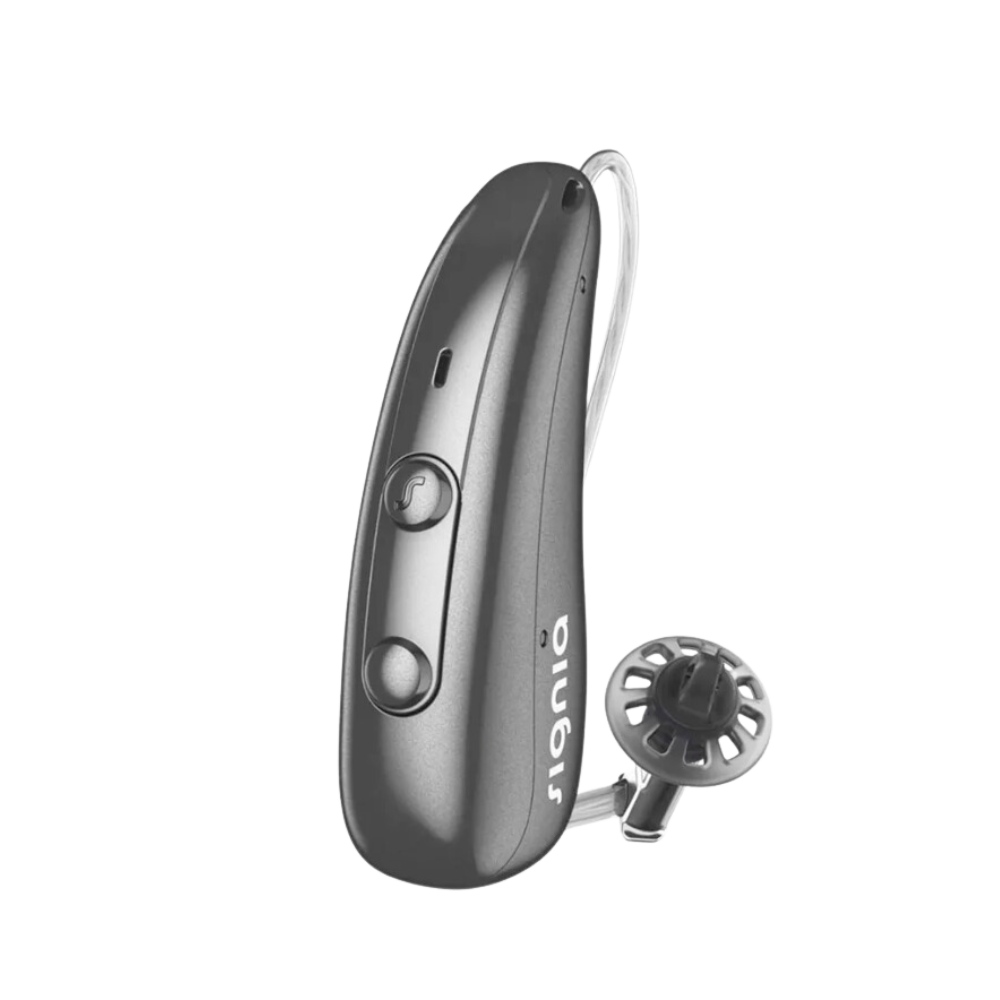
Flagship model Signia IX
Pros
Signia processes your own voice separately so it sounds natural to you, rather than the hollow or overly loud quality many new hearing aid wearers notice at first.
The hearing aids use AI to focus on and enhance the voice of whoever you're talking to directly in front of you.
The Styletto is shaped more like a sleek earbud than a traditional hearing aid, making it one of the least noticeable options on the market.
Cons
Signia IX offers a lot of automatic sound processing, but some patients may need an extra adjustment or two before everything feels completely natural.
Strengths and trade-offs.
No hearing aid brand is right for everyone. Below is a balanced view of where the Signia IX tends to perform well and where another option might be a stronger fit. This is the same conversation Dr. Kun has in the consulting room.
Who tends to do well with the Signia IX.
These are general patterns. The only reliable answer comes from your audiogram and a conversation with Dr. Kun, not from a brand page.
Often a good fit
- New hearing aid users bothered by how their own voice sounds in hearing aids
- Patients whose primary challenge is face-to-face or small group conversation
- Those who want a slim, design-forward hearing aid form factor
- Patients with tinnitus who want therapy features built directly into their hearing aids