
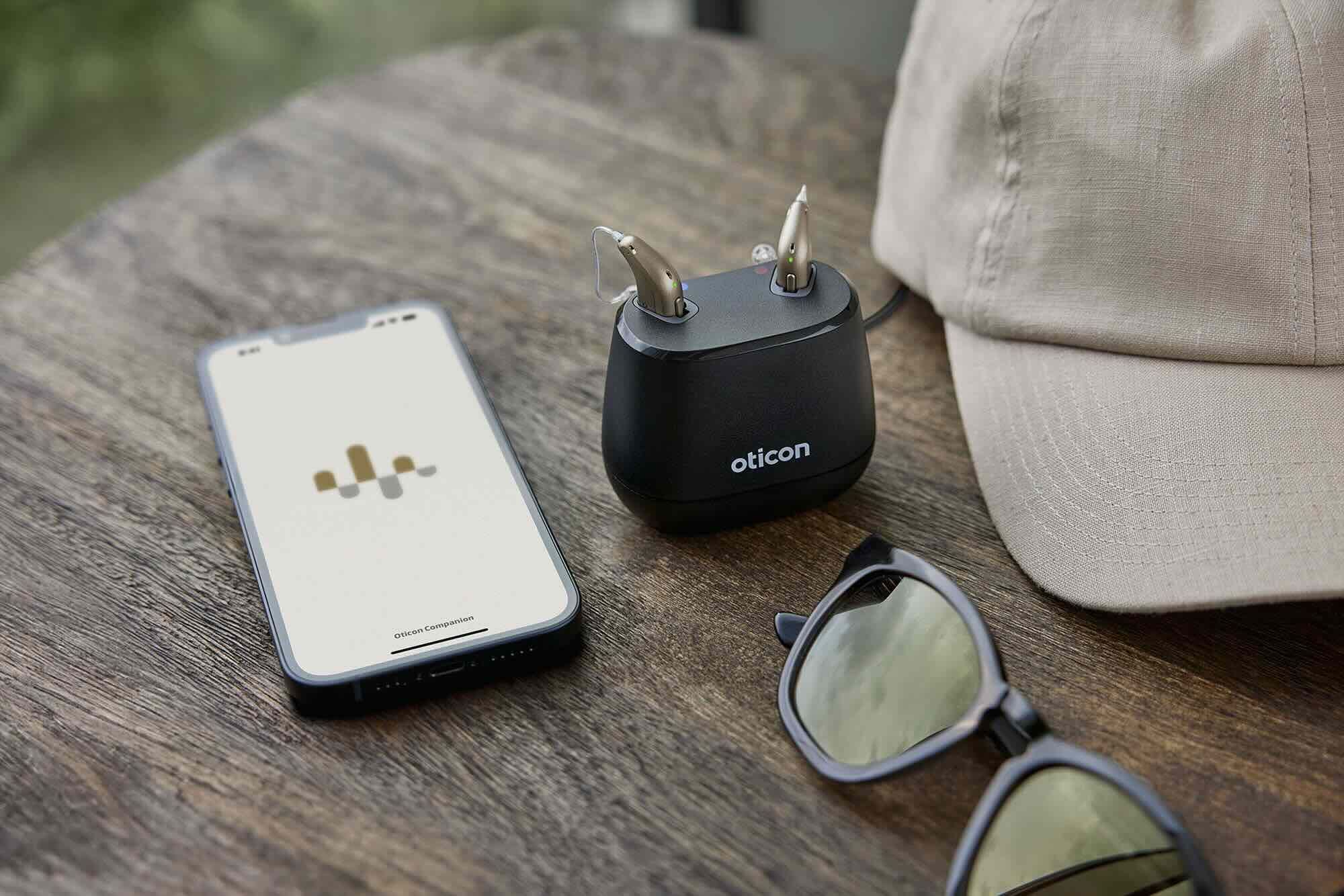
Oticon
Brain-first hearing technology
Danish engineering focused on delivering a full, balanced sound scene, designed to give the brain more complete sound information to work with rather than a narrowed, aggressively processed one.
What Oticon is known for.
Oticon is a Danish manufacturer built around a philosophy they call BrainHearing: the idea that hearing aids should support the brain's natural way of processing sound, rather than narrowing and filtering what you hear. Instead of cutting out background noise, they let more of the full sound environment through so the brain can do its own sorting.
They're well-regarded for a natural, spacious sound quality, and their slim behind-the-ear designs are a popular choice for patients who want something discreet.
Meet the Oticon Intent.
Oticon Intent is Oticon's current flagship hearing aid.
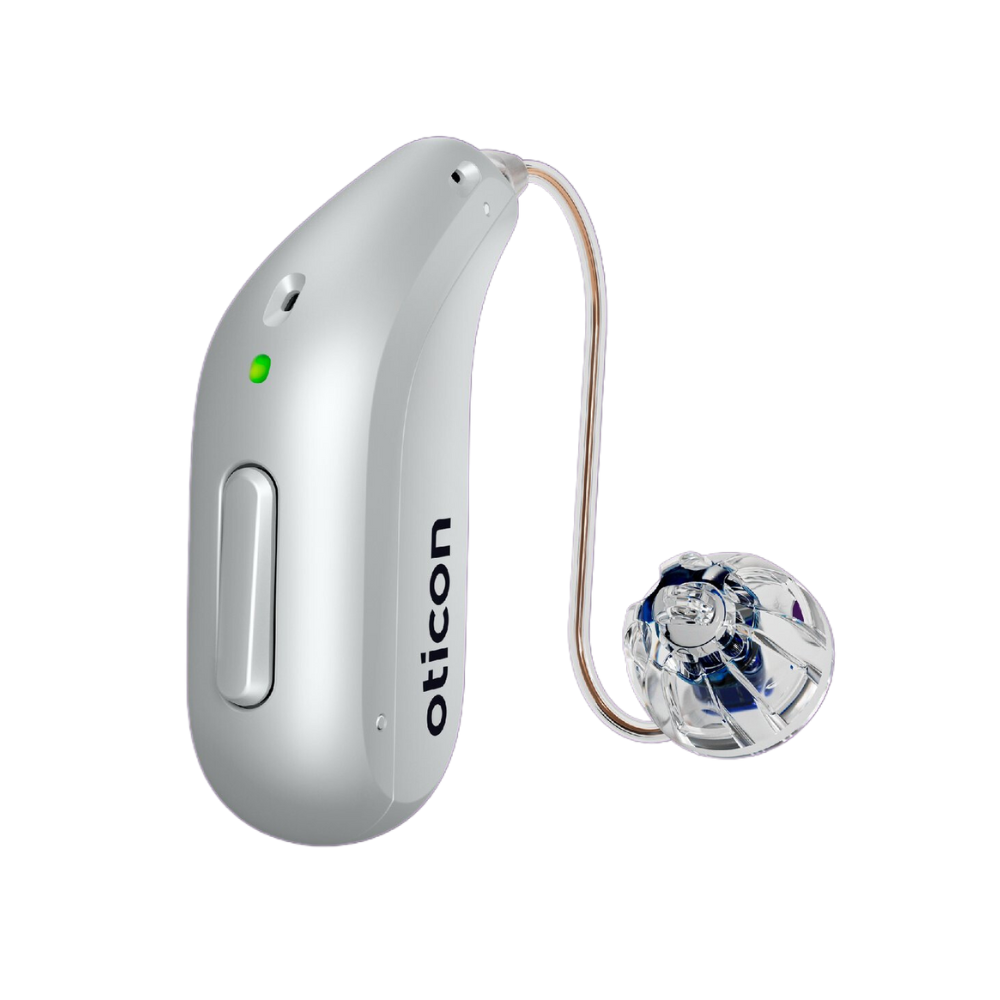
Flagship model Oticon Intent
Pros
Built-in sensors track what you're doing, like turning your head or joining a conversation, to figure out what you're trying to hear and adjust accordingly.
Rather than filtering out a lot of background sound, Oticon lets you hear more of your full environment, which many wearers find sounds more natural and less tiring over time.
You can adjust your volume and settings from your Apple Watch without taking out your phone.
Cons
If you need a separate microphone for hearing across a room or in a classroom, there are fewer options here compared to some other manufacturers.
Strengths and trade-offs.
No hearing aid brand is right for everyone. Below is a balanced view of where the Oticon Intent tends to perform well and where another option might be a stronger fit. This is the same conversation Dr. Kun has in the consulting room.
Who tends to do well with the Oticon Intent.
These are general patterns. The only reliable answer comes from your audiogram and a conversation with Dr. Kun, not from a brand page.
Often a good fit
- Patients who prioritize a natural, spacious sound quality over targeted noise reduction
- Those with mild to moderately-severe hearing loss who prefer a slim receiver-in-canal style
- iPhone and Apple Watch users who want discreet, wrist-level control and reliable direct streaming
- Patients who move through varied environments and want hearing aids that adapt to their listening behavior, not just the acoustics around them